From
The Inside
Out
Wim Wenders’s Intimate Portrait of Peter Zumthor
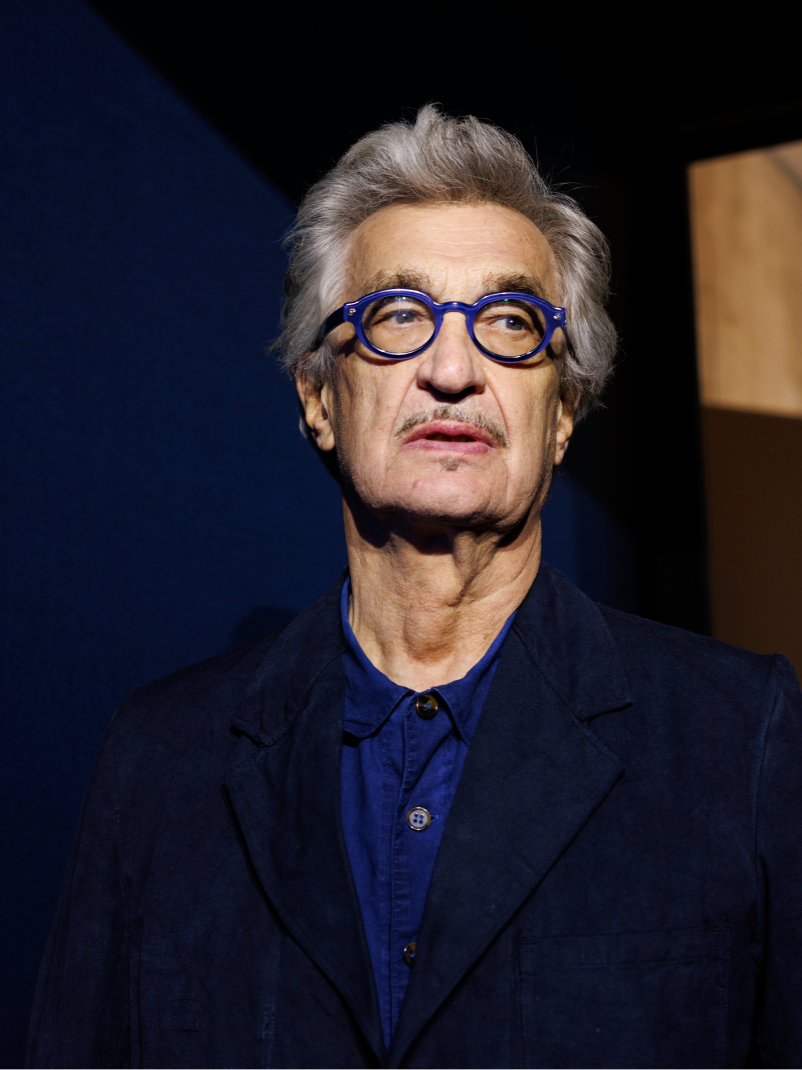
Wim Wenders’s documentaries are at their most compelling when they draw close to their subjects, allowing people and places to reveal themselves on their own terms. In his new film about Peter Zumthor, the Pritzker Prize-winning Swiss architect, he brings an extraordinary intimacy to this approach. From Inside Out is a contemplative journey into the mind of an architect for whom building begins long before the first stone is laid.
A Building in Time
Wim Wenders talks about his encounter with Peter Zumthor, the gift of reading places and telling their stories, the physicality of buildings, and the slow process of making his film whilst reflecting on architecture.
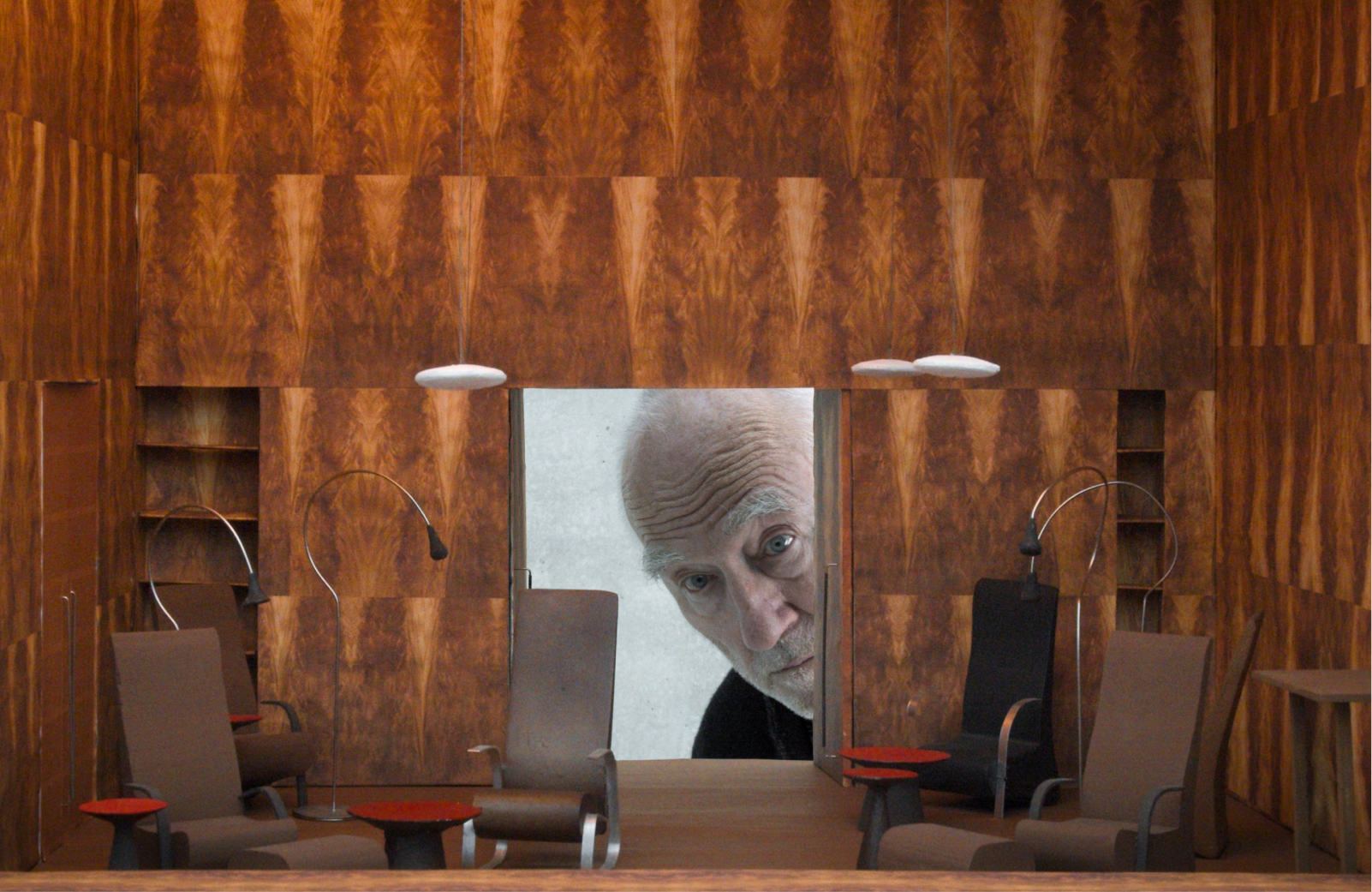
You spent 14 years getting to know Peter Zumthor and documenting his life and work. What do you particularly admire about him?
W
W
As an builder, what I admire most about him is that he doesn’t do everything he could do. He spends a long time studying the history of a place before he builds anything. And if, in the process, he realises that something isn’t quite right about the history or that he can’t really get to grips with it, he doesn’t go ahead with it – and I think that’s brilliant. As a result, he only creates what he truly understands. His buildings blend into the location in such a way that they really do belong there – they ‘belong there in a friendly way’, to quote him. Many buildings you see today are statements – including statements about their surroundings; they’re often interesting, but tend to be rather unwelcoming statements. I know of many buildings that astonish me every time, because I find them rather hostile. Peter would never do that. He would definitely want it to ‘fit’ in. And that approach is close to my own filmmaking. I make films based on places and want the story to belong to that place – it couldn’t be set anywhere else. Peter has the same ambition: the house shouldn’t be able to stand anywhere else. And it should look as though it had always been there. That attitude is very close to my own approach to filmmaking. I make films that emerge from places, and I want the story to belong to that particular place, so that it could not exist anywhere else. Peter has the same ambition for his buildings: they should be impossible to imagine anywhere else, and they should look as though they had always been there.
The self-evident that Peter Zumthor speaks of?
W
W
The self-evident. I have great respect for that, and over the past 14 years I’ve come to understand this approach better and better. That’s something that connects me very closely to him.
-
-
-
-
Have you become friends over the years?
W
W
Yes, in a cautious sort of way, because we often went a long time without seeing each other. Over the past 14 years, we’ve filmed together eleven times in all sorts of places around the world, each time for between two days and three and a half weeks. In between, there were times when we didn’t see each other for two years, as we were both continuing to work on our own projects. During that time, four other films were made. It was a lovely approach that I wasn’t familiar with. I’d never worked like that before; I didn’t really know exactly how it worked: how could I do justice to his work, to this radical way of building, where every building really stands on its own as something unique? That was the right approach: putting the pieces together like a jigsaw, stepping back, looking at the jigsaw again, and also checking the pieces I’d already turned. What was still missing? That’s how it slowly came together. It’s a privilege to be able to make a film that grows together step by step, so that in the end a coherent picture emerges. That’s what brought us together. I think we were friends right from the start, because Peter said he wouldn’t interfere, wouldn’t say anything, and wouldn’t watch the film until it was finished. Until then, he trusted me. And that’s quite a lot to go on. Of course, he knew my films, but we weren’t as close then as we are now. After 14 years, our friendship remains, even without us continuing to work together.
-
-
-
-
To begin with, you show Peter Zumthor’s famous lecture at the Southern California Institute of Architecture in Santa Monica on 9 November 1988. The grainy video gives it an almost auratic quality. Is that what he is in your eyes: a visionary?
W
W
I was familiar with his writings before I met him; his little book *Atmospheres*, in particular, was a legendary little volume for me. It’s the sort of thing you read in an evening or on a flight. I’d underlined a lot of it and knew that he’s very articulate. What he writes about architecture has little to do with architecture itself: how a door handle feels, or how a dark corridor leading into a kitchen is, in itself, architecture. Atmosphere, he writes, is architecture in itself. I was very impressed by the way he seeks to construct emotions. For that alone, he was already an exemplary figure to me.
-
-
-
-
How familiar were you with Peter Zumthor’s architecture when you set about making the film?
W
W
I’d spent a week at the Vals Thermal Baths without ever actually seeing Peter himself. It was quite impressive how the architecture comes across up close there, a far cry from spas where you find yourself in whirlpools. Vals is austere – water, stone and light. Something existential. I was very impressed by this almost philosophical or spiritual space.
His buildings blend into the location in such a way that they really do belong there.
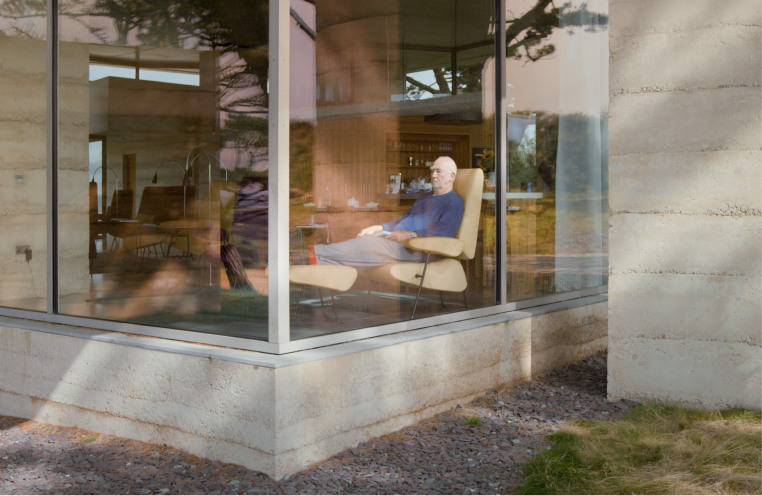
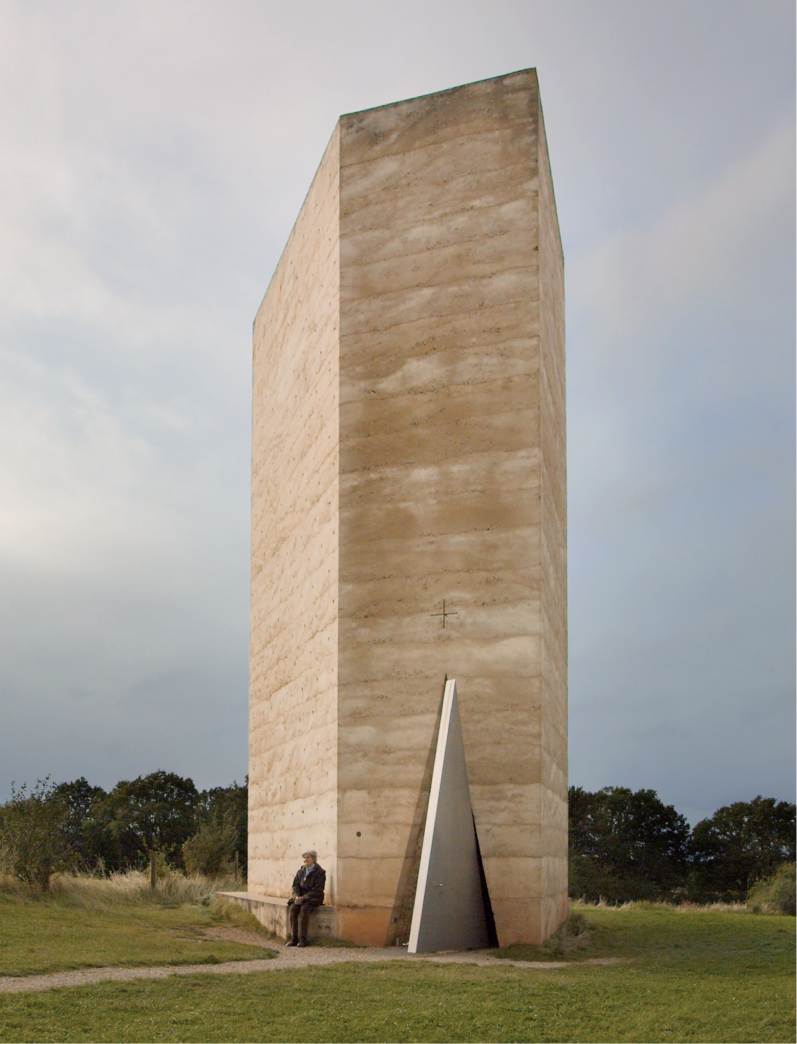
For Peter Zumthor, it is all about the connection to the place, to the whole. You, too, do not simply guide the viewer through his buildings, but evoke feelings that resonate within every space. Are you concerned with the spiritual aspect of art, which manifests itself in an auratic architecture?
W
W
Absolutely. That is, of course, difficult to film, difficult to create or to perceive. That is why, after careful consideration, I shot the film in such a way that there is always someone through whom the film understands or explores a place. Most people are playing themselves. They are real people experiencing the building. But at the same time, they serve as examples or experiences for us as viewers. There is certainly a certain element of fiction in it. I felt that was necessary so as not to simply film the building itself. That’s a shortcoming of many architectural films, some of which I actually liked very much.
-
-
-
-
What is the shortcoming of many films about architecture?
W
W
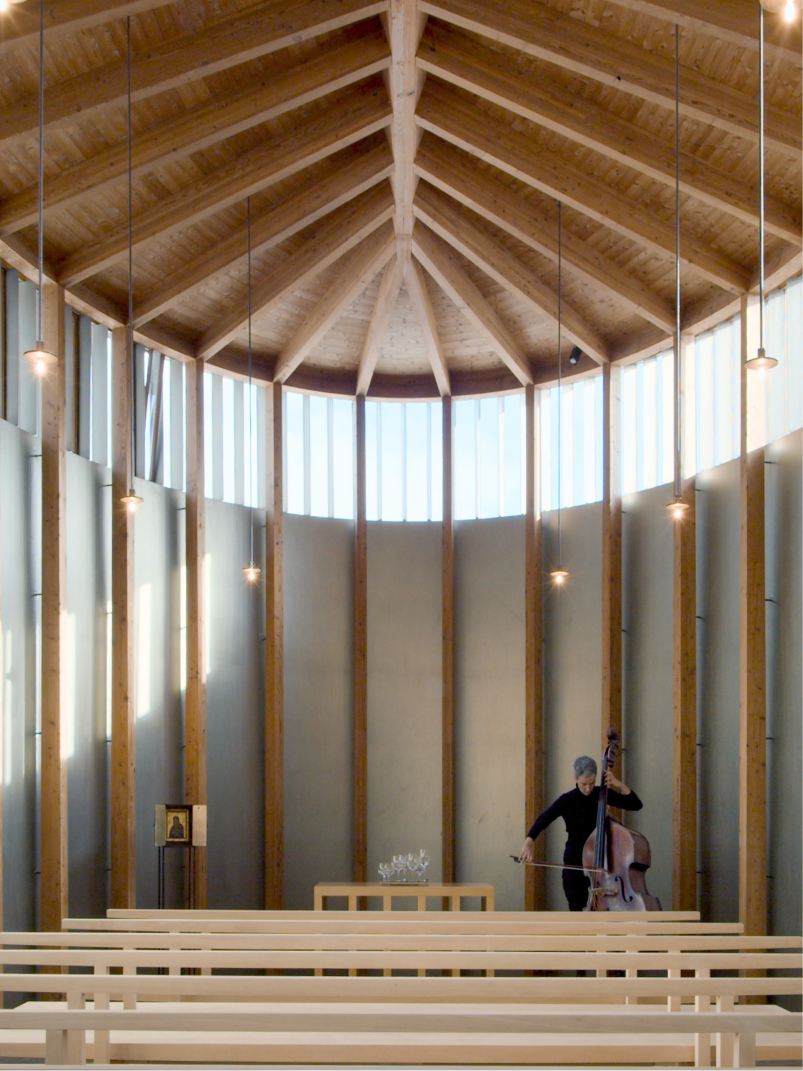
There’s always something missing: the feeling of actually being inside. It’s not just a matter of reverently filming a building. Most architectural films merely capture the obvious. The camera is the focal point and cannot be a person. The camera tries to capture the building. But when you discover a place through someone else, a kind of story always comes to the fore. And that is, after all, the intersection between the existential – and indeed the spiritual – and the self. You’re, of course, a bit detached to begin with when you watch a film like this. But when you enter it through someone else, it takes on a different dimension. This young woman who goes into the chapel – the Bruder Klaus Chapel – or the American writer who loses her way in the far north and visits this deeply spiritual building in memory of the victims of the witch burnings. You can sense that it is precisely this sort of building that gets under your skin, because Siri Hustvedt, much like Tippi Hedren in Hitchcock’s The Birds, finds herself caught up in a horror story.
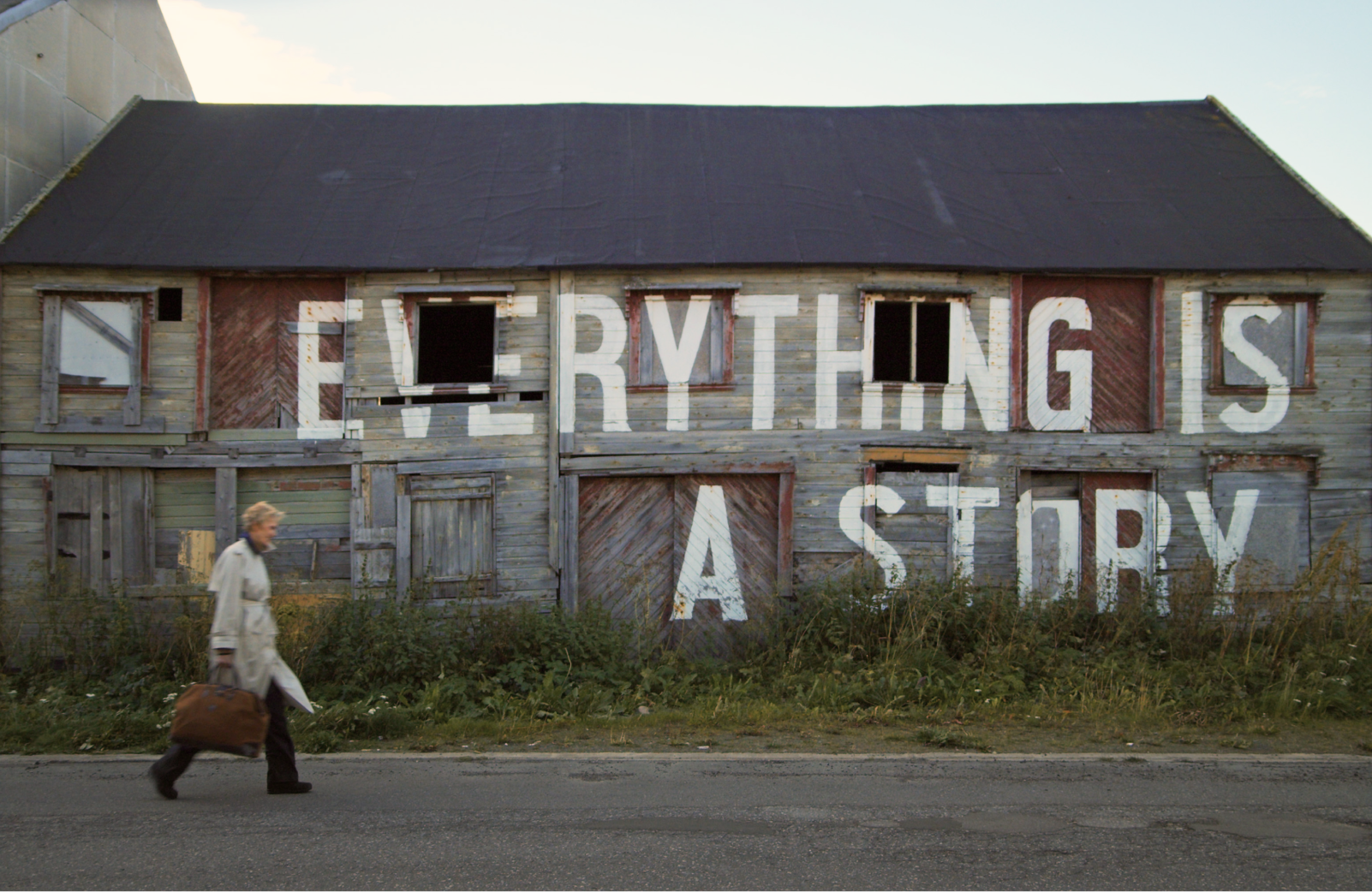
When Siri Hustvedt leaves the Witches’ Memorial, she walks past a building bearing the words Everything is a story. Did you have that put up specially?
W
W
I’d never do that. I was simply blown away when I was out walking in that little town of Vardø in northern Norway – with a population of barely 2,500 – and suddenly found myself standing in front of this old barn on which a Norwegian artist had left this message. It actually said Everything is a story, and I immediately took a photo, showed it to my cameraman and wondered how we could work it into the film. In the end, we had Siri walk past this saying on her way back from the memorial. I even edited a version without the slogan, because I thought it might be a bit too obvious. It’s not as if I need to include the film’s instruction manual as well – though it’s a bit like that – but I just thought it was too good to be true that this house actually existed, with Everything is a story written on it.
-
-
-
-
Allow me to make a leap: in The American Friend, Dennis Hopper praises Bruno Ganz’s workshop with words that Peter Zumthor uses almost identically when he speaks of architecture’s role in conveying a sense of home: namely, tranquillity and atmosphere. Is there a deep kinship between the two of you in the way you think and work artistically?
W
W
I do believe that we both have a great gift for reading places and for taking in everything they can tell us, and how they can shelter us and make us feel at home. I can’t actually build anything, but a film is, after all, a kind of building in time, where you want the people who go to see it to feel at home, so to speak. We have a lot in common, but we only realised that bit by bit. And Peter, I think, only realised it when he’d seen the finished film, right at the very end. That’s when he actually saw it in its completed form. But it’s true: what Dennis is describing there is actually exactly what Peter partly describes in Atmosphären – how one can experience architecture and what it is that moves you. Sometimes it’s just a light, or the way something feels.
-
-
-
-
You portray building as an act of creation. Peter Zumthor speaks – and the building emerges as an idea, first as a network of lines, and finally materialises after a fade-in. Is it precisely this moment that interests you?
W
W
Yes, but at the same time, you can’t actually be there. I’ve never witnessed such an act first-hand, and I’d also feel a certain reluctance to film someone whilst they’re working alone and deep in thought. When does that even happen? You can’t possibly know. I wasn’t there myself, but I have the traces of it. Including the very first drawings, in which Peter discovers the outline of a building for the very first time – a building that was later actually constructed just like that. I did enjoy seeing him at work, even though I was ultimately very hesitant. After all, you can’t show a writer sitting at a typewriter as he really is. Or a painter… That was also the biggest sticking point with Anselm (Kiefer). Anselm didn’t want – “please, please!” – to be filmed whilst he was painting under any circumstances. He said: “I have to be alone then; you can’t… And besides: who wants to see that? A painter painting…’ In fact, I only managed to persuade him once or twice to let us be there. And on both occasions, he completely forgot we were there. The only chance is to film it in such a way that the person completely forgets there are observers. Because you can’t really do certain things when you’re being watched.
-
-
-
-
They’ve learnt how to make themselves invisible with their camera.
W
W
We managed to do that a few times with Peter as well, but we mainly showed the finished work. Or work that couldn’t be built; that’s why the section on the Topography of Terror is such a crucial part of the film – it reveals one of the conditions of being an architect: that you can plan a building, but then be unable to build it.
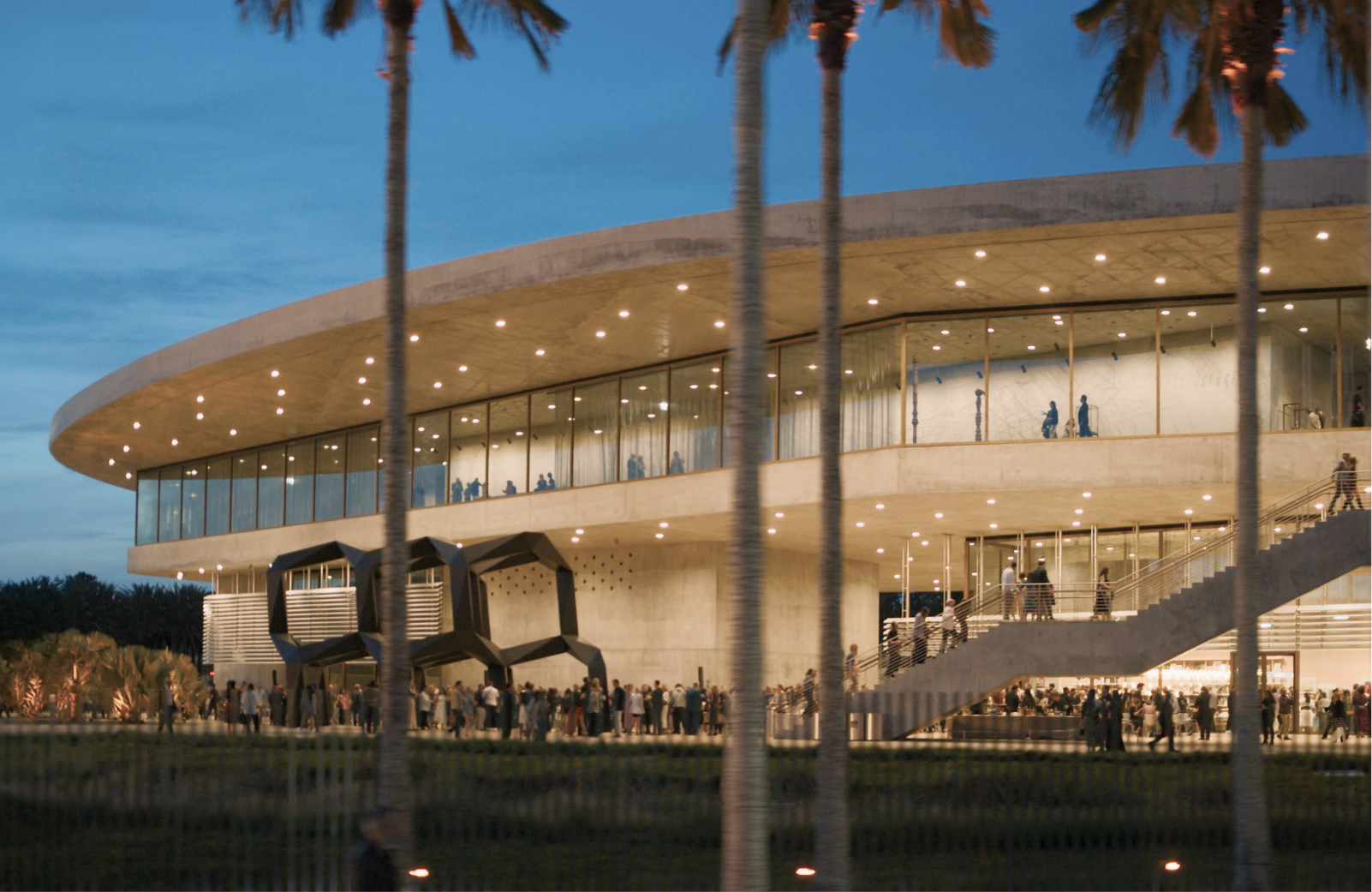
A film is, after all, a kind of building in time, where you want the people who go to see it to feel at home.
That was the point at which I found myself wondering how you dealt with an ego as big as Peter Zumthor’s when he said the project would have been good for Berlin. Towards the end of the film, there’s a moment where he says he has now completed the LACMA, that huge museum in L.A., and in doing so has proved all the critics wrong who believed he could only build on a small scale. He can certainly build on a very large scale. You were very close to him at that moment, right on the verge of him taking offence. Was that more of a happy accident?
W
W
That’s a good way of putting it. You see: the building faced a lot of opposition. Even before it was built, many people were already convinced it would be a fiasco. They knew it even before they’d had a chance to see it. When it was finally completed, however, many were actually very, very taken with the building’s physicality, its architectural language, the way it fits into the city and how, as a museum, it actually captures the city itself. The great thing about LACMA (Los Angeles County Museum of Art) was that the director, Michael Govan, and Peter Zumthor knew only that they wanted to create a museum that was different: a museum without classification, in which everything is of equal value and no art is presented as ‘high art’, thereby relegating other forms to a ‘lower level of art’. In this building, everything was to be displayed and viewed on an equal footing. It took a long time to design a building to achieve this – and in the end, they succeeded. In this building, you can clearly see just how much thought is sometimes required to part with something – something architecture in particular finds so difficult, precisely because architecture is, after all, embodied in stone. Changing that is no easy task: in this case, a museum spread over a single floor, where visitors find their own individual path through the history of art. It’s certainly very daring and will remain controversial in the future, but I really liked it. It can be unsettling at first, but it can also make you very happy – to experience everything without classification, to find yourself confronted with the art itself, and to see it all side by side; it’s unfamiliar, but it also sets you free in a lovely way.
-
-
-
-
Would you have Peter Zumthor build your house?
W
W
I’m too old to build a house, so it’s no longer an option for me. But as a young man, if I’d had any idea what architecture was, I wouldn’t have let anyone else build my house. Then, of course, you’d also have to be lucky enough for him to actually do it. Peter hasn’t built much, after all. I’m familiar with his collected works. He’s documented everything himself in five volumes. And it’s interesting that he’s left out a few things from his early years. He’s said himself that those didn’t count yet. Back then, he was building because he had certain models in mind. The first house he built without any models, he says, was that incredibly simple building from 1988 – a protective structure over the remains of the Roman settlement Curia Raetorum in Chur. A very peculiar, open-plan structure. The wind whistles through it. That’s where his work began, he says, and that’s where we started filming too.
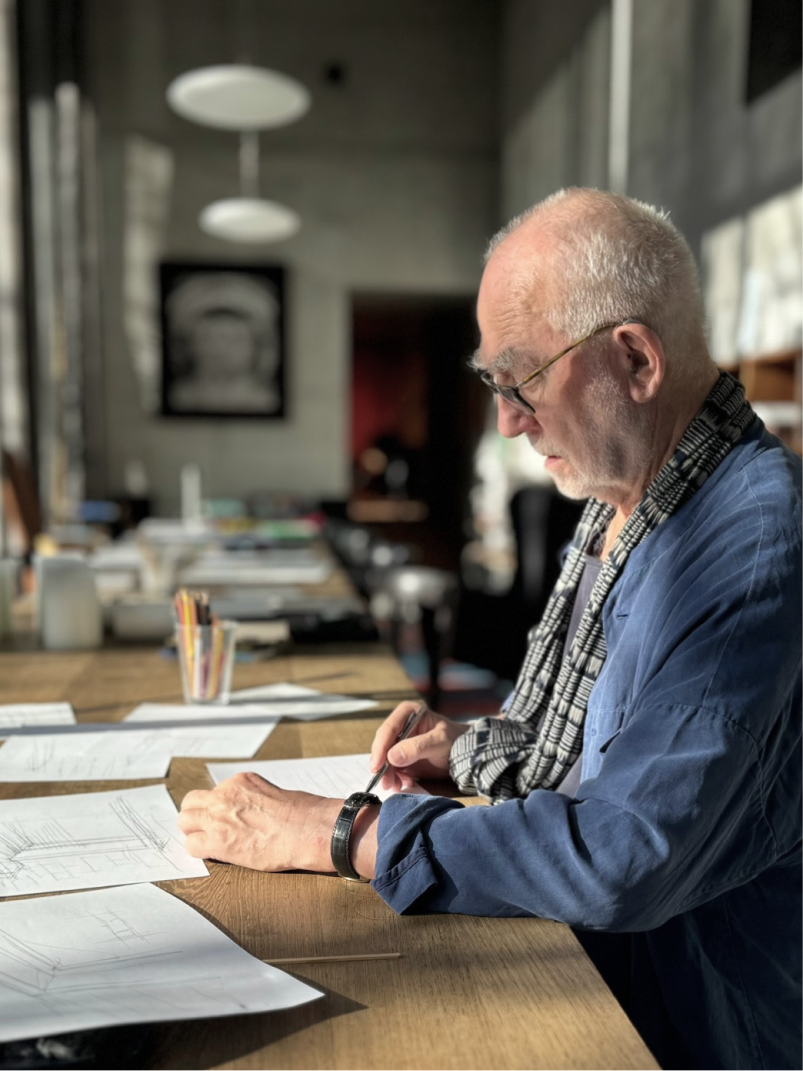
From now on, I’ll only build things that come from within myself.
This act of liberation is made very clear in the film when Zumthor breaks away from his role models and focuses solely on realising his own vision.
W
W
Sometimes you need a bit of luck, as in this situation, where it was of vital importance to Peter that his wife – his most important collaborator over many years – should appear in the film, even though, following a stroke, she was no longer really able to engage in conversation. It was he himself who asked me whether I would dare to film the two of them despite this disability. I replied: ‘Absolutely, provided the family agrees.’ By this point in the film, the audience already knows that Peter built the house in Leis for her. For the film, it is absolutely vital that she is seen in person, even if she was no longer able to express herself eloquently.
-
-
-
-
That’s true, but she’s fully present with her yes – it was very moving to witness that.
W
W
Naturally, we then found ourselves much closer to her as a person than we’d initially thought. There’s a fine line where something suddenly becomes private, but the two of them managed to avoid making it feel uncomfortable in that scene – as if we were intruding on something private. But it was precisely in that conversation that I also understood where Peter got the courage to say, "From now on, I’ll only build things that come from within myself.’ ‘I’m letting go of everything now; I’m leaving behind Mario Botta and Louis Kahn and all the architects I used to admire—Oscar Niemeyer and all those who were on my mind as a young architect—and from now on I’ll only build what I know I can do and that comes entirely from within me.’ It was important that it turned out the way it has; that was also the shared courage shown by Peter and his wife Annalisa in revealing themselves in such a vulnerable way.
-
-
-
-
Towards the end, there is a shot at LACMA in which a colleague of yours whom you hold in high regard unfolds the vast cosmos and connects this museum with the world.
W
W
I didn’t know what Werner Herzog would say; I hadn’t even intended to ask him a question. But I knew that he is friends with Michael Govan and had been following the construction – after all, he has lived in Los Angeles for a long time. So I placed Lena and Werner Herzog in the most prominent spot in the museum, where the cockpit would be in an aeroplane, or the bridge on a large ocean liner. The building does have something of a cruise ship about it. So they’re sitting at the helm, deliberately bathed in the evening light, as the day draws to a close. In this atmosphere, Los Angeles is a completely different city, bathed in a very different glow. Their gaze is directed westwards, towards the sea. But I had absolutely no idea what they would say.