Steps into
the Unknown
Werner Sobek
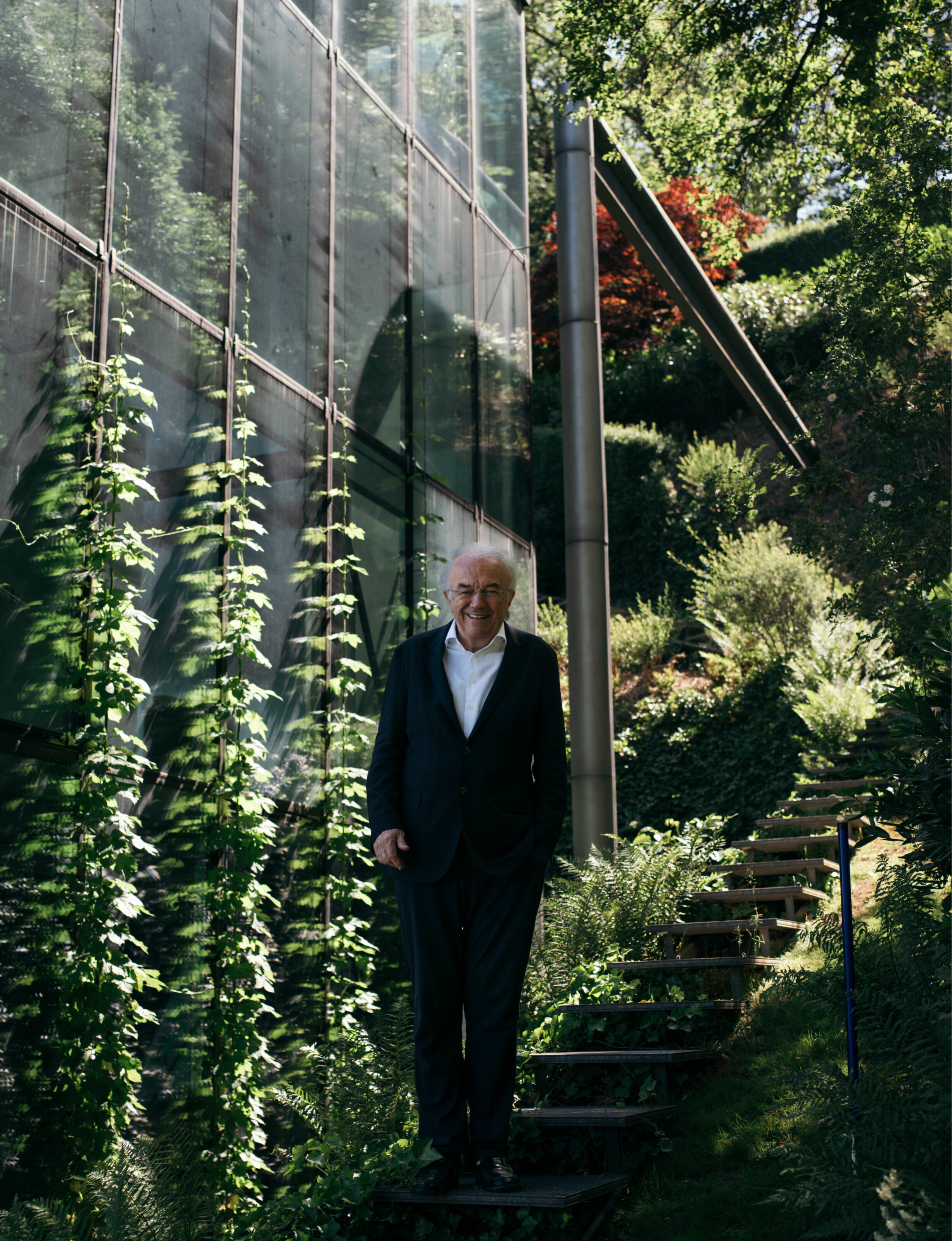
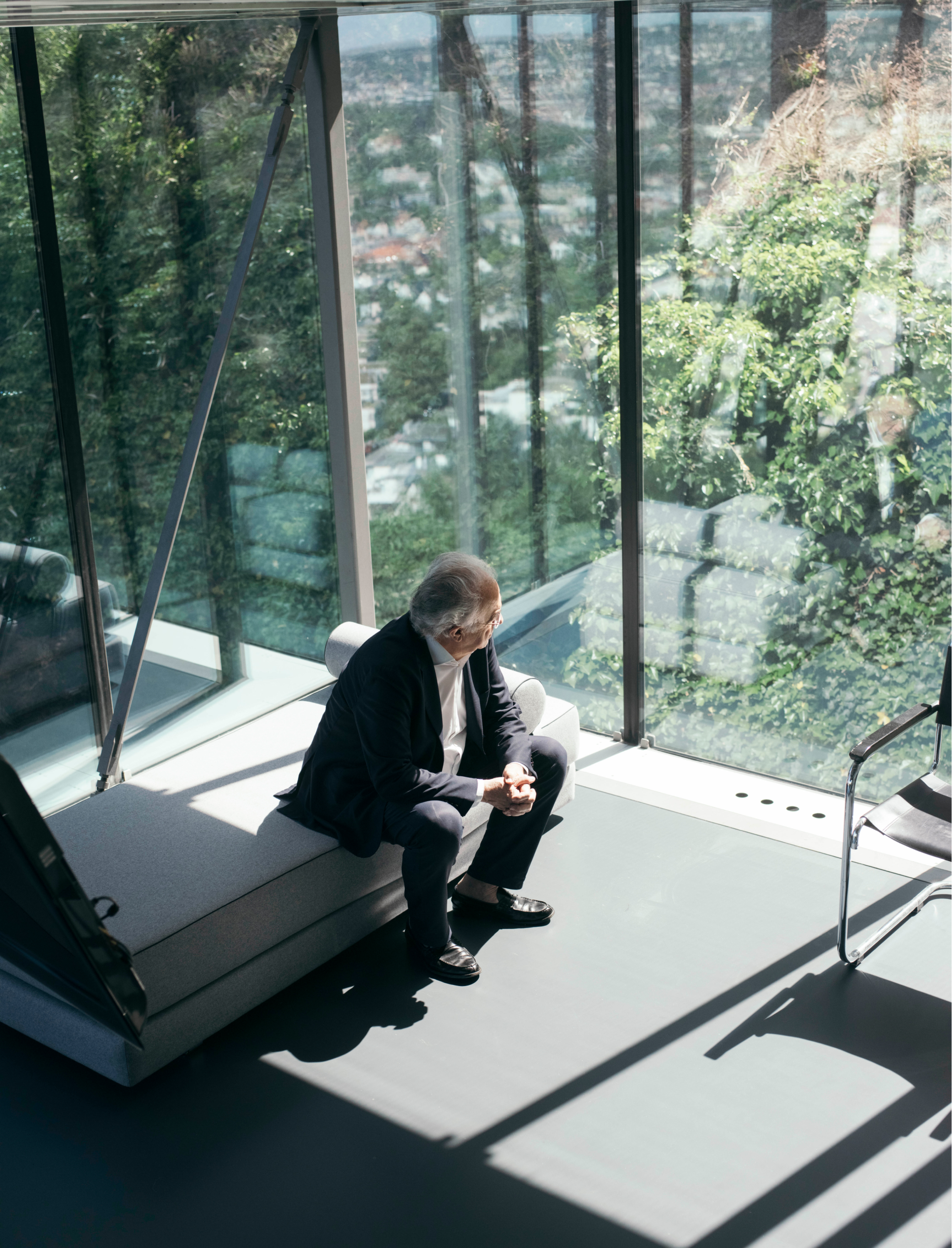
Werner Sobek in a major interview on the limits of knowledge in an ever-changing world, a rapid R-evolution in thinking, and our last chance to prevent a climate catastrophe.

WERNER
SOBEK
Architect and engineer
You once said that you wanted to understand this world.
W
S
That is indeed what drives me. Understanding this world requires knowing exactly where one’s own understanding ends, or rather where general understanding ends. That is where terra incognita begins – the part that we humans no longer understand, or only understand to a limited extent, or have not yet explored. Finding that boundary has always been at the heart of my life.
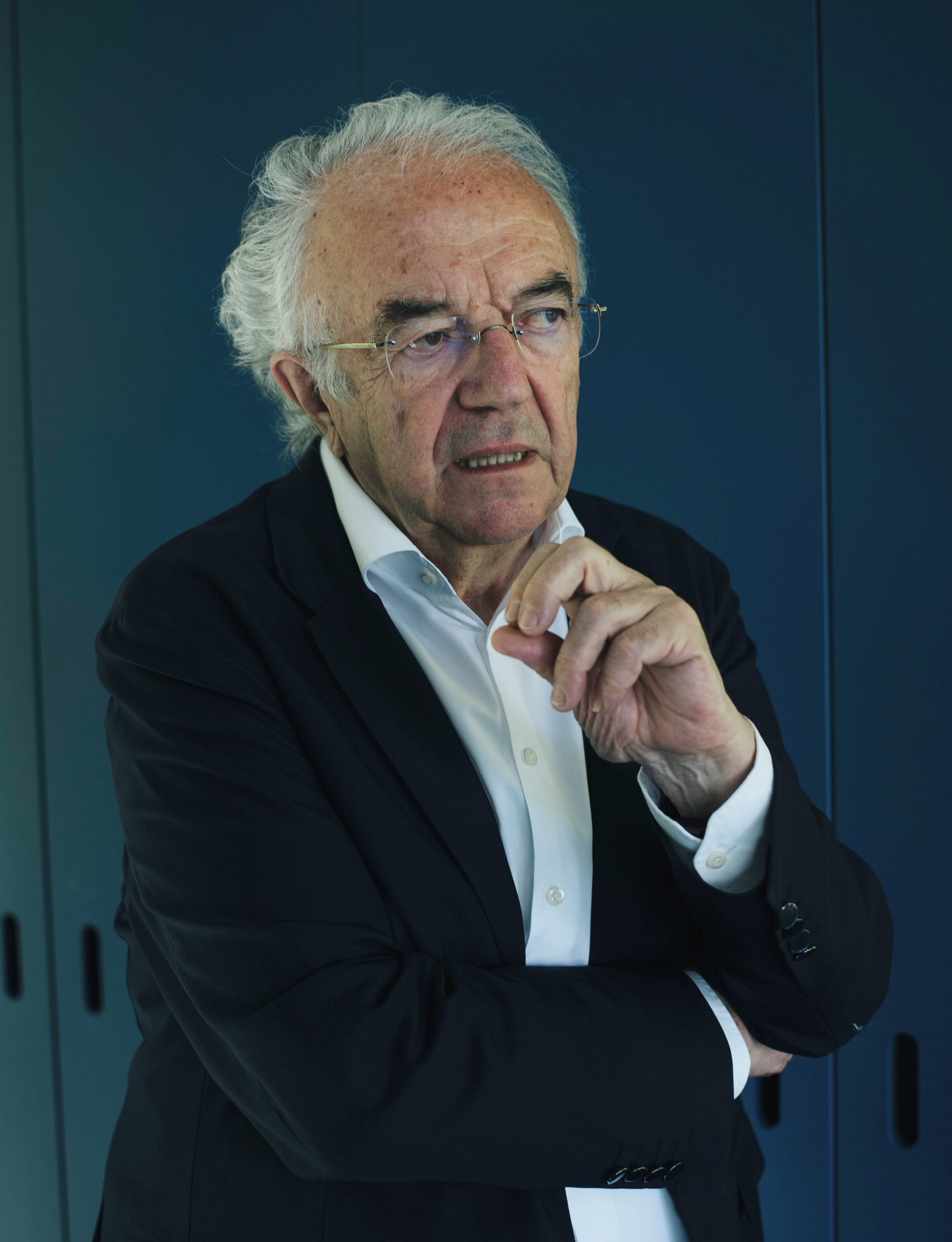
I’m like a shepherd on a mountain hike, with the sheep symbolizing the problems that cannot yet be solved.
To push boundaries further?
W
S
Or simply to step over them. Once you’ve recognised the limits of your knowledge, it’s relatively easy to take a step into the unknown. Invention is nothing more than knowing where the boundary lies today. For me, this is where the concept of a hunch comes into play. Scientists and investigators always need to have a hunch as to where the solution might lie. I’ve always managed that rather well.
-
-
-
-
Is pushing boundaries not only at the heart of your work,
but of your life as well?
W
S
It is, in fact, what my life is all about.
A strategic process, much like playing chess.
-
-
-
-
How do you deal with failure in this context?
W
S
The most noble task of a professor in Germany is to fail. Anyone who does not fail has never ventured into the unknown. It’s like a game of chess. If a move doesn’t work, I must come up with another one, and then another. Sometimes I have to come up with 50. Perhaps I then realise that my intellectual capacity isn’t sufficient, or that the foundations of my education are lacking. Then you must find another approach. And another, and another. I’m like a shepherd on a mountain hike, with the sheep symbolizing the problems that cannot yet be solved. We walk and walk and search. Once you find where your knowledge is lacking, you might simply go and acquire it. And at some point, the problem is simply solved.
-
-
-
-
It’s fascinating that you chose the image of this mountain hike. Would you say that science is like a topography in which the unknown is gradually mapped out? And wouldn’t you have to find new terms for the unknown at the same time?
W
S
That brings us to Wittgenstein. Yes, the unknown can be categorised, and the good scientist knows where his own terra incognita lies, as well as that of others. And then the task is to describe this territory. To understand its characteristics. I am moved by a quote from Bloch: architecture is the attempt to create what is called Heimat in German. A term difficult to translate. Its meaning is something between the sense of belonging and the place one calls home. That is how I interpret my daily work – as an attempt to create Heimat in harmony with nature. And that, of course, is a spectrum that begins with philosophy, meets mathematic and ends with a mountain hike. It is a devilishly difficult balancing act, almost impossible to manage alone, but only achievable through endless and interdisciplinary work. And that means you must know where your own knowledge ends and you have to ask someone else. Not as a mere subcontractor who is expected to provide information, but as a human being and part of the team, part of the idea, part of the creation of this built environment. My guiding principle in life is the unconditional appreciation of others as human beings of equal dignity. That’s simply how I was brought up, and that’s how I interact with people.
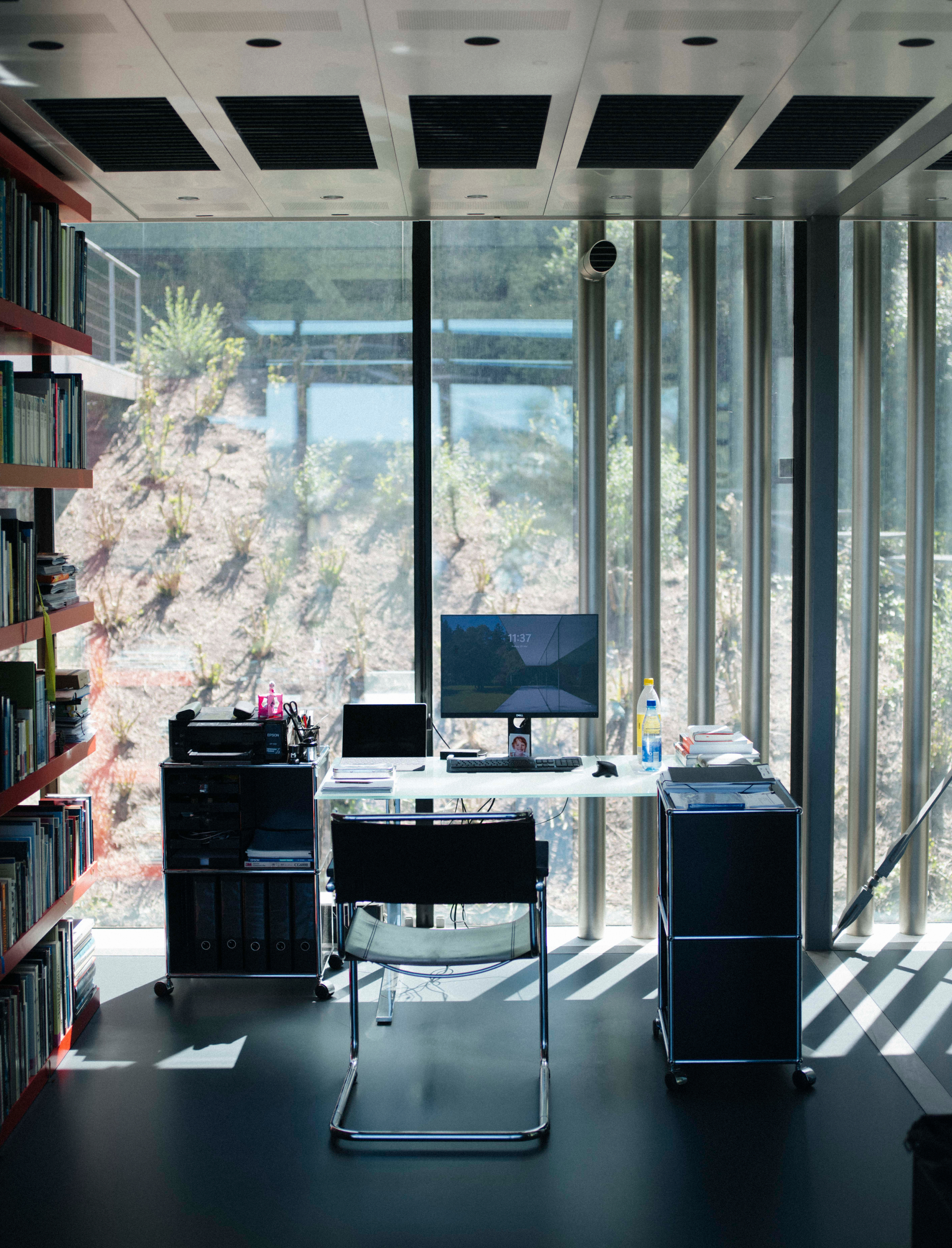
New things emerge within a team.
W
S
Exactly. Developing something new, based on the recognition of a shortcoming, is typically an interdisciplinary challenge. As soon as I step beyond the boundaries of my own disciplines, I find myself in a realm of partial incompetence. And that is something we should acknowledge in one another.
-
-
-
-
You were just talking about a hunch—your gut feeling or intuition. So, there is more to it than just rational understanding. How do these two spheres fit together?
W
S
I work with verbal precision, and when you’re developing something that didn’t exist before, you don’t have a word for it either. For Wittgenstein, the limits of language were also the limits of our world. Added to this is the non-verbal realm of creative abilities. If we take this gut feeling or this sense of the atmosphere – which is very pronounced in the realm of art – I must say: non-verbal thinking is an important component of my thought process. And in doing so, I go beyond the rational.
-
-
-
-
At the same time, you come across people
who rely on state-of-the-art technology and don’t want to take any risks.
W
S
I meet them every day; after all, the desire for comprehensive cover is a fundamental characteristic of our today’s society. The comprehensive cover society is risk-free, and the insurance industry keeps us trapped in endless contracts. A willingness to take risks, however – risk in the conscious sense defined by Ernst Bloch – is the strategic development of the future. The problems we are heading towards are so terrifyingly vast, so devastating to humanity, that we have no choice but to discuss these matters and solve them at breakneck speed.
-
-
-
-
Do you still use the term sustainability in all this?
W
S
No, because as a term it has become almost meaningless. It has too many meanings, ranging from minority rights to acidification potential. Sustainability has become an empty shell.
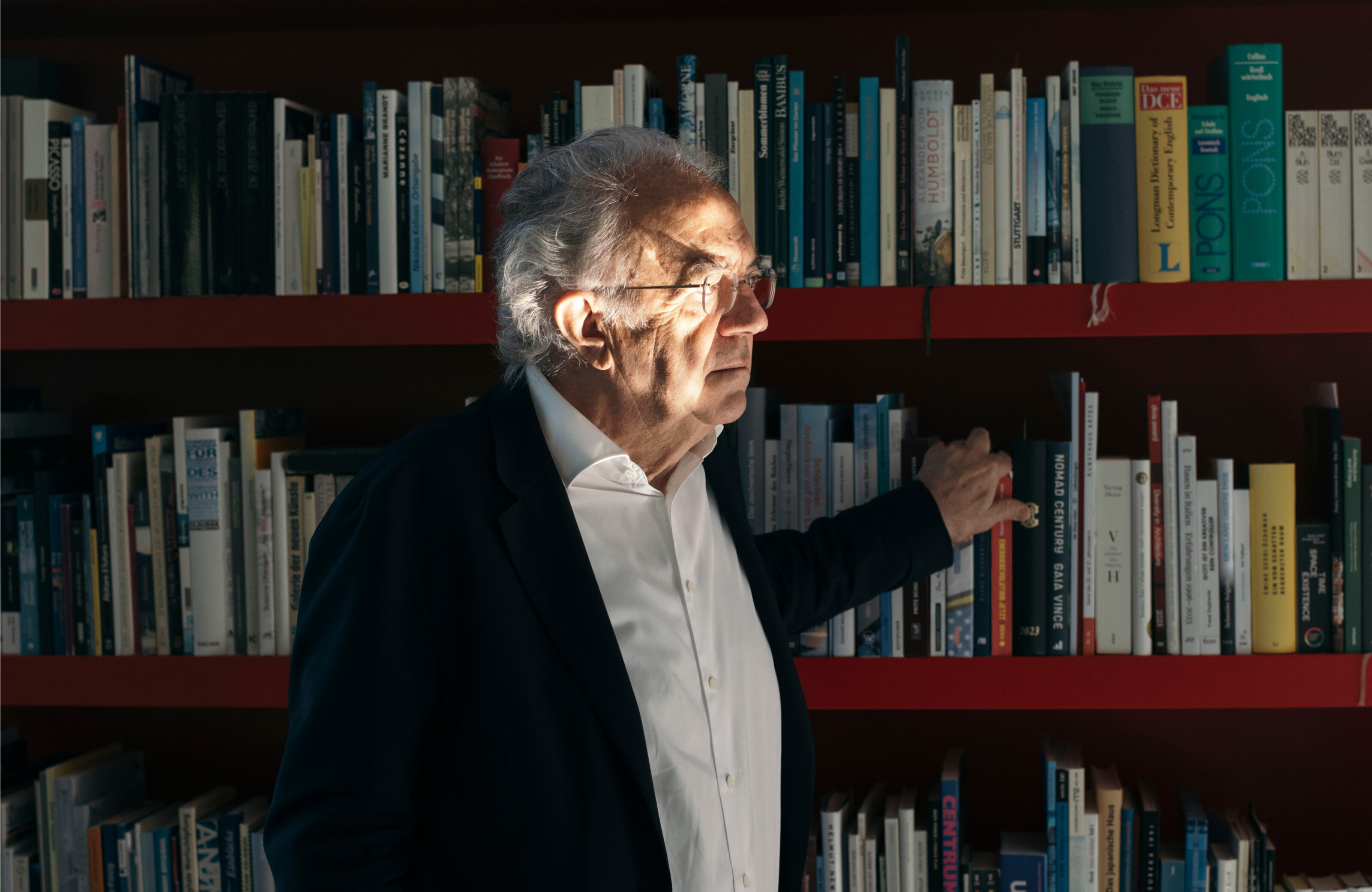

We are part of nature. And if it no longer functions, we are depriving ourselves of the foundations of life.
And is circular construction well on the way to taking its place?
W
S
That’s right. It’s one of those buzzwords that a group of architects and engineers use to distinguish themselves, as long as others don’t have it in their vocabulary. Let’s just say: the cycle. Or, even better, building in harmony with nature. That covers it all. Rubbish is simply not in harmony with nature. If we do not achieve this harmony at breakneck speed, we as humanity stand no chance. By humanity I mean eight billion people today, or ten billion by 2050. Some billionaires still feel safe, but a world at our current level can only function as a system. Nobody can simply opt out.
-
-
-
-
In fact, the last remaining resources – Greenland and Antarctica –
are being snapped up in a hurry, and we carry on as before.
W
S
For the first time in human history, we have reached a point where the poisoning of the atmosphere anywhere in the world can affect my life. In the past, poisoning a well was considered serious offence and was universally condemned. This is an attitude we should apply to today’s poisoning of our atmosphere as well. That is why I have formulated my 18th thesis: Your actions affect my very being. This applies to every person in the world – including ourselves ...
-
-
-
-
So environmental protection is a form of self-interest?
W
S
It should. But let’s look at this concept of the environment. Thinking in terms of environments is a product of the Enlightenment, during which humankind declared itself the subject and the world the object that we may explore, use and plunder. There are even Nobel Prize winners in the field of economics who claimed that as long as we can replace natural systems with technical ones, everything is fine. So, if lettuce no longer grows in the field because we have ruined the climate, and it therefore must be grown in an indoor environment, everything is fine. That is, of course, tragic. We are part of nature. And if it no longer functions, we are depriving ourselves of the foundations of life. As you can see, precision in the use of words is important, because otherwise false meanings creep in.
-
-
-
-
How important is it to you that your insights are heard?
W
S
I have never taught compulsory subjects, and my academic students have always come of their own accord. As an academic teacher, conveying or passing on insights is my moral duty. Merely imparting knowledge is only half the task; the other half is instilling the right attitude. And attitude cannot be conveyed through digital media. Attitude is, rather, how you move your hands when arguing, whether you smile or laugh when a student asks an awkward question, how you dress yourself and so on. The desire to convey my insights is a moral obligation. Academia must communicate, must take a stand and must assume responsibility. I call for every German professor to give a public lecture in German once a year, ideally in the market square or in the town hall.
-
-
-
-
How far have you got with this outreach work?
W
S
Not to the extent I’d like. Many people now attend my talks regularly – on average, two a week, each with 200 attendees or more. At the same time, I’ve noticed a certain reluctance on the part of the media, some of which don’t seem particularly keen to cover this topic in depth. Yet that should be the role of the public service broadcasters: to impart knowledge. There is a lack of reliable information. Knowledge is thin on the ground, and information is often presented inaccurately and incompletely.
-
-
-
-
But isn’t that generally a problem of the commons? That personal gain takes precedence, and the broader perspective is lacking?
W
S
Yes. In my third book in the non nobis series, I demonstrate clearly that sustainable construction is not a technical problem. It is a social problem. Today, when we consider ourselves to be the best-informed society in human history, people act contrary to what reason demands. We face not a scientific or a technical but a social problem.
Can this be resolved?
W
S
Through a revolution. In our social system, the maximisation of profit for those who distribute, and sell is the guiding principle. Even if all citizens had access to transparent information on this matter, these insights would still conflict with the way we are socialized, educated, governed.
-
-
-
-
Manipulated?
W
S
I’m referring to Edward Bernays, the founder of science-based propaganda. Together with Walter Lippmann, Sigmund Freud’s nephew laid the foundations for strategies to manipulate the population in a democracy, for example by instilling certain values.
-
-
-
-
Can you give an example of these values?
W
S
I’m thinking of a banking advert that was used a couple of years ago: “If you can do something, you get something; if you get something, you have something; if you have something, you’re somebody.” That was nothing more than a promise of social advancement. People are told that in a democracy everyone is equal; yet Germany’s constitution merely states that everyone is equal before the law. That is something quite different. The US Constitution, too, speaks of the pursuit of happiness. But what effect does this promise of social advancement have on our society? You define social standing through consumption. Subconsciously, consumer behaviour is linked to social recognition. But if someone says they spend eight hours a day caring for the terminally ill, they may well be a good person, but in terms of earning money they have achieved little. We are ranked according to our capacity for consumption: ever-larger cars, ever-longer journeys. It is all about maximising personal gain.
-
-
-
-
A question of perception?
W
S
Rather, it is a question of philosophy – one that should not only reflect on concepts such as truth and being, but also on how a society might be structured in which recognition is distributed equally.
-
-
-
-
The word revolution came up earlier.
What would that look like?
W
S
Like evolution at breakneck speed. An R-evolution, with the R standing for race. We have exactly one generation to achieve this. We consume as if in a frenzy. After all, that’s what has been drilled into our heads. We are subjected to constant manipulation of our subconscious and believe that everyone is equal, that anyone can become a millionaire. In this way, we accept competition, a dog-eat-dog society and the maximisation of profit.
-
-
-
-
A reset?
W
S
Let’s put it this way: we need a civil dialogue and access to information, as well as a public forum for debate, so that people can form their own opinions. That is one constituent element. The second constituent element of a democracy is absolute oversight of state institutions by the citizens. However, in today’s social media culture, nothing is discussed seriously.
-
-
-
-
How do you personally come to terms with all the facts
about the state of the world that you have gathered?
W
S
Sometimes I can’t sleep. There are certain things I might have been able to understand ten or twenty years ago, but I didn’t have the time, nor did I ask the right questions, nor did I have the right hunch. Take a look at the current situation. Here are a few examples: Nestlé is now investing nearly a billion dollars in breeding new coffee plants because they’re experiencing significant slumps in their harvests. The price of olive oil has increased significantly, and the price of orange juice concentrate has doubled. In Galicia, on the north-west coast of Spain, mussel and crustacean farming is collapsing because the water is too warm and the pH of the water is becoming more acidic as the seawater absorbs CO₂ – at least on the surface. Agricultural research has identified a very clear correlation between so-called “excessively hot days” and crop failures. As I said, we still have one generation’s worth of time to change course. We must try to achieve this goal together. That is what constitutes quality – not in the sense of a tolerance of one thousandth of a millimetre, but in terms of integrity. We need a multi-perspective view of the world, a view that also takes other cultural contexts into account. Travelling to other parts of the world enriches my life. And I always want to know what to expect – and, conversely, what is expected of me. I have often found that, just before shaking hands, I’ve been asked whether we’d be leaving again once the project was over. My answer was always the same: No, we’re opening an office here. We want to learn from you but also bring know how with us. Germans and locals work together, on an equal footing, and we continue to support the locals back in Germany. And suddenly you see the world through different eyes, from multiple perspectives – say, an Egyptian one and a German one – which lends it an unexpected depth.
That is how I interpret my daily work – as an attempt to create Heimat in harmony with nature.